
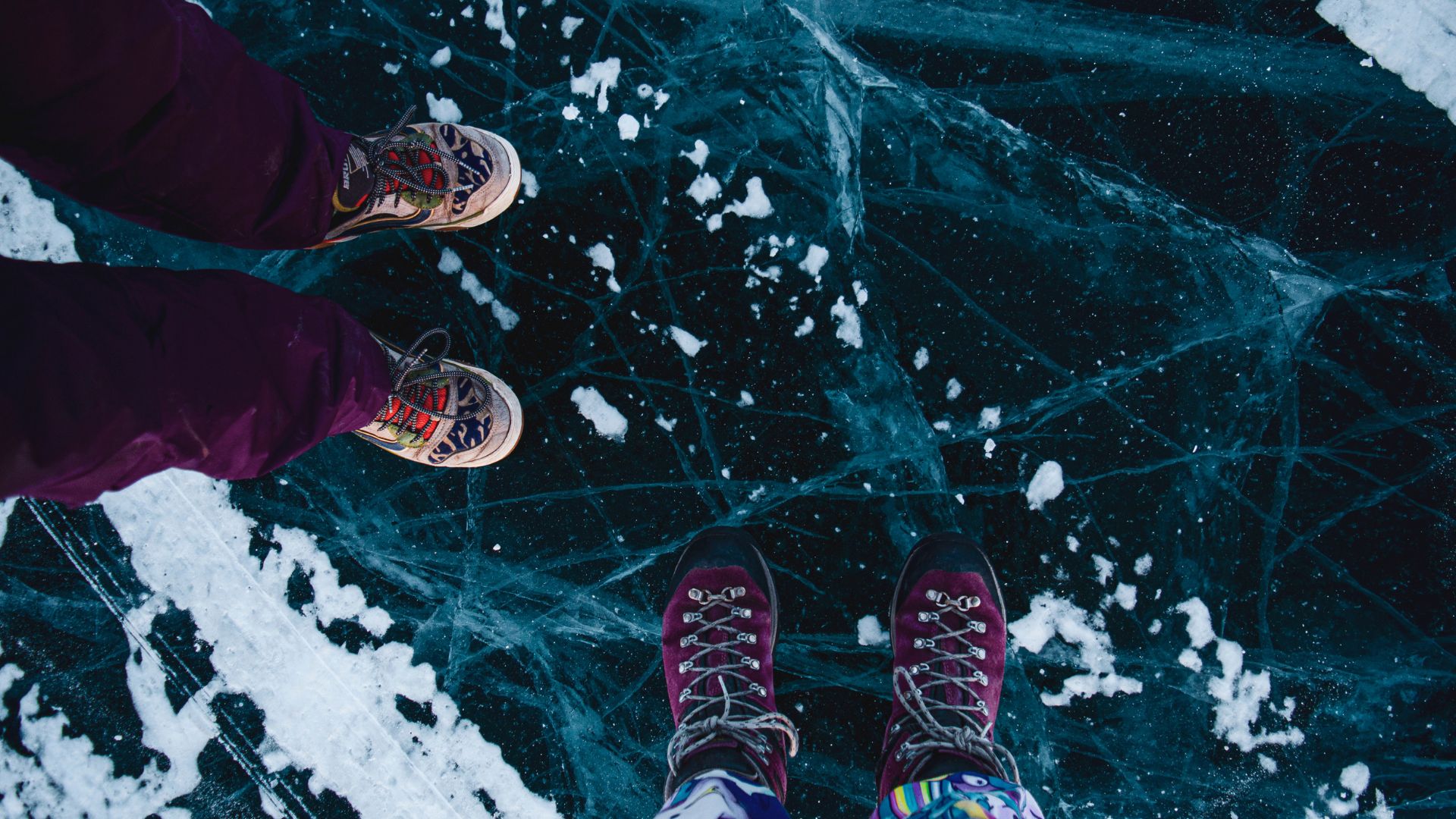
When South Tyrol’s lakes freeze over in winter, many families are drawn onto the ice. Still, caution is essential, as ice skating on lakes in South Tyrol is always at your own risk. Unlike in Austria or Germany, there is no official authority that declares frozen lakes safe for skating.
Before you lace up your skates, take a moment to carefully assess the lake and the current conditions.
How safe is the ice?
One of the most important indicators is ice thickness. As a general guideline: Ice thinner than five centimeters is life-threatening and should never be stepped on. At around eight to ten centimeters, a single person may cautiously go onto the ice. Multiple people should only be on the lake once the ice reaches twelve to fifteen centimeters. From about eighteen centimeters, the ice is considered relatively stable – but there is never a guarantee. Ice thickness can vary greatly across a lake.
Common dangers you should be aware of
Even if the ice appears solid, certain areas are especially risky. These include inflows and outflows such as streams or springs, where water is constantly moving. Reed beds and shorelines, dark patches in the ice, as well as bridges, jetties, or rocks are also dangerous. A layer of snow on the ice can be deceptive, as it insulates the surface and prevents further freezing. These hazards are often hard for children to recognize, so extra attention is required.
Reading weather and temperature conditions correctly
Safe ice skating in winter requires several days of continuous freezing temperatures, ideally including cold nights. Warm days combined with freezing nights can make the ice brittle and unstable. Rain or föhn winds are particularly dangerous, as they can weaken the ice very quickly. A simple rule of thumb applies: If temperatures rise noticeably during the day, it’s better to stay off the ice.
Ask locals for advice
If you are unsure, ask around. Local residents or tourism offices in South Tyrol can often provide helpful information about current lake conditions. While this can guide your decision, it should never replace your own careful judgment.
How to behave safely on the ice
Never go onto the ice alone and always step onto the lake slowly and cautiously. Avoid jumping or running at all costs. Keep a safe distance from others and listen carefully: cracking or creaking noises are warning signs and mean you should turn back immediately. Make sure you remember the route you took onto the ice and return the same way.
Emergency situations – what you need to know
In an emergency, call the European emergency number 112 immediately.
If someone breaks through the ice, staying calm is crucial. Lie flat on your stomach to distribute your weight, carefully pull yourself out of the hole, and roll away from the break. Do not stand up right away.
If you want to help someone else, call emergency services first. Lie flat on the ice to spread your weight and keep a safe distance from the hole. Only attempt a rescue using objects such as a branch, scarf, jacket, or backpack to avoid putting yourself in danger.
Don’t forget personal responsibility
These tips are meant to help you enjoy ice skating on lakes in South Tyrol more safely, but they cannot replace your own assessment of the situation. You are always responsible for your own safety.
When in doubt, the safest choice is simple: stay on the shore.
A good alternative is outdoor artificial ice rinks or indoor ice arenas. You can find an overview here.


